
NIH grants are having a positive effect on faculty research projects
UT Austin School of Nursing faculty are translating National Institutes of Health (NIH) funding into action, advancing research that addresses a wide range of health challenges and engages different populations and communities.
“The breadth of NIH-funded research across our School reflects a culture of innovation, collaboration and scientific excellence,” Dean Kavita Radhakrishnan said. “It underscores that UT Austin Nursing is not only educating future nurse leaders but also generating the insights that will transform health care.”
Together, the projects show how NIH support gives nursing researchers the time and resources to translate evidence into tools, knowledge and services tailored to the communities they aim to serve.
Some recent NIH award recipients from the School of Nursing include:
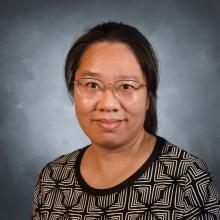
Yaolin Pei
Yaolin Pei, PhD, recognized that cultural beliefs and experiences can shape how Chinese American families understand and approach dementia care. To better understand these differences and how they shape care, she launched a study supported by an NIH R00 grant. During the three-year R00, the independent-research phase of NIH’s Pathway to Independence Award, Pei will test a culturally adapted decision aid with 60 Chinese American dementia caregivers who must choose between tube feeding and careful hand feeding for a family member with advanced dementia.
“We’re interested to know if this intervention can improve their knowledge and reduce their decisional conflict,” Pei said. “We’re also interested to see if participants remain involved in the study, since the topic of death and dying is a sensitive subject for those Chinese American dementia caregivers.”
Pei said she has noticed differences in how Chinese Americans respond to care versus other demographic groups. For example, the study has shown that Chinese Americans may view tube feeding as a comfort-oriented and responsible option when oral intake becomes minimal.
“Feeding decisions within this community are highly complex,” Pei said. “It’s not just medical decision-making. It’s also related to other issues, like family harmony and family responsibility.”
One goal of the study is to get dementia caregivers more active in discussing their decision-making on feeding options with their family members and health care providers. Often, Pei said, caregivers don’t enter these discussions until they’ve reached a crisis moment.
“It is important to engage caregivers, health care providers and family members in timely discussions before a crisis occurs, so that feeding decisions can be considered proactively and the patient’s previously expressed wishes can be recognized and respected,” she said.
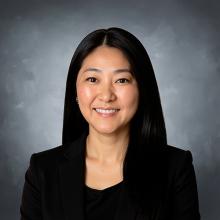
Linda Kim
Linda Kim, PhD, MSN, RN, PHN, CPHQ, CGNC, FAAN, joined UT Austin as director of the Center for Global Nursing and Health in May 2025. She is leading a five-year study supported by a highly competitive R01 grant from the National Institute of Mental Health. Her study examines whether repeated COVID-19 infections and social determinants of health affect immune-inflammatory pathways linked to depression risk, with a particular focus on health care workers.
Kim received the grant while working at Cedars-Sinai Medical Center in Los Angeles, where the project was part of a larger study.
“We’ve hypothesized that depression may be linked to inflammation in the brain,” Kim explained. “My research focuses on eicosanoids, which are biomarkers associated with inflammatory processes in the body. Previous studies have shown that these biomarkers differ in people who have had COVID-19, and we’re investigating whether there is a connection between those changes and depression following infection.”
The study also examines how demographic and social factors, including race, gender, age and socioeconomic status, may shape both the risk of COVID-19 exposure and mental health outcomes. “These factors can influence not only how frequently they are exposed to COVID-19, but also their vulnerability to experiencing depressive symptoms,” Kim said.
While the study remains in the data collection phase, Kim hopes to begin analyzing the data in spring 2027.
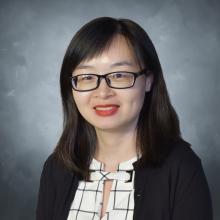
Yang Li
Yang Li, PhD, RN, received an R01 grant from the National Institute of Nursing Research for work that focuses on underserved women who face domestic violence.
For example, women of Chinese origin often don’t seek help because of social and cultural factors.
“They may feel embarrassed, they may feel stigma, they may feel ashamed to disclose their abusive experiences to people or to seek outside help,” said Li. “A lot of them aren’t aware they are being abused. Violence, especially domestic violence, is a hidden issue among some cultural groups, including the Chinese culture. They don’t think it’s a big issue—they see it as conflict between couples. It’s a private matter.”
“Even if they want to seek help, they don’t know where to look,” she said. “America has done a good job in making services available, but Chinese American women who may face language barriers don’t often know where to find them.”
Survivors of domestic violence may experience low self-esteem, depression and self-blame from the violence that happened to them.
Even when they find the resources, Li said women of Chinese origin are often afraid counselors won’t understand their background and culture, so they think they won’t get the support they need.
Li has been working on another study with Dr. John Lowe that looks at domestic violence among Native American women, who experience disproportionately high rates of violence. The research seeks to better understand their experiences and identify ways to strengthen support and prevention efforts.
“It’s a really shocking proportion,” Li said. “Many live in rural areas and are isolated from help. In underserved populations, there is really limited support.”
Providing support can be challenging because partner violence is a cycle of abuse, and those relationships are often dynamic. Li said her team aims to empower Native American women who have experienced partner violence to make informed decisions about the relationship, increase their safety and improve their mental well-being.
“Our goal is not to convince them to end the abusive relationship; our goal is to help them make informed decisions,” she said. “We help them develop individualized safety plans and provide information about available resources so they can decide what is safest and best for their individual circumstances.”