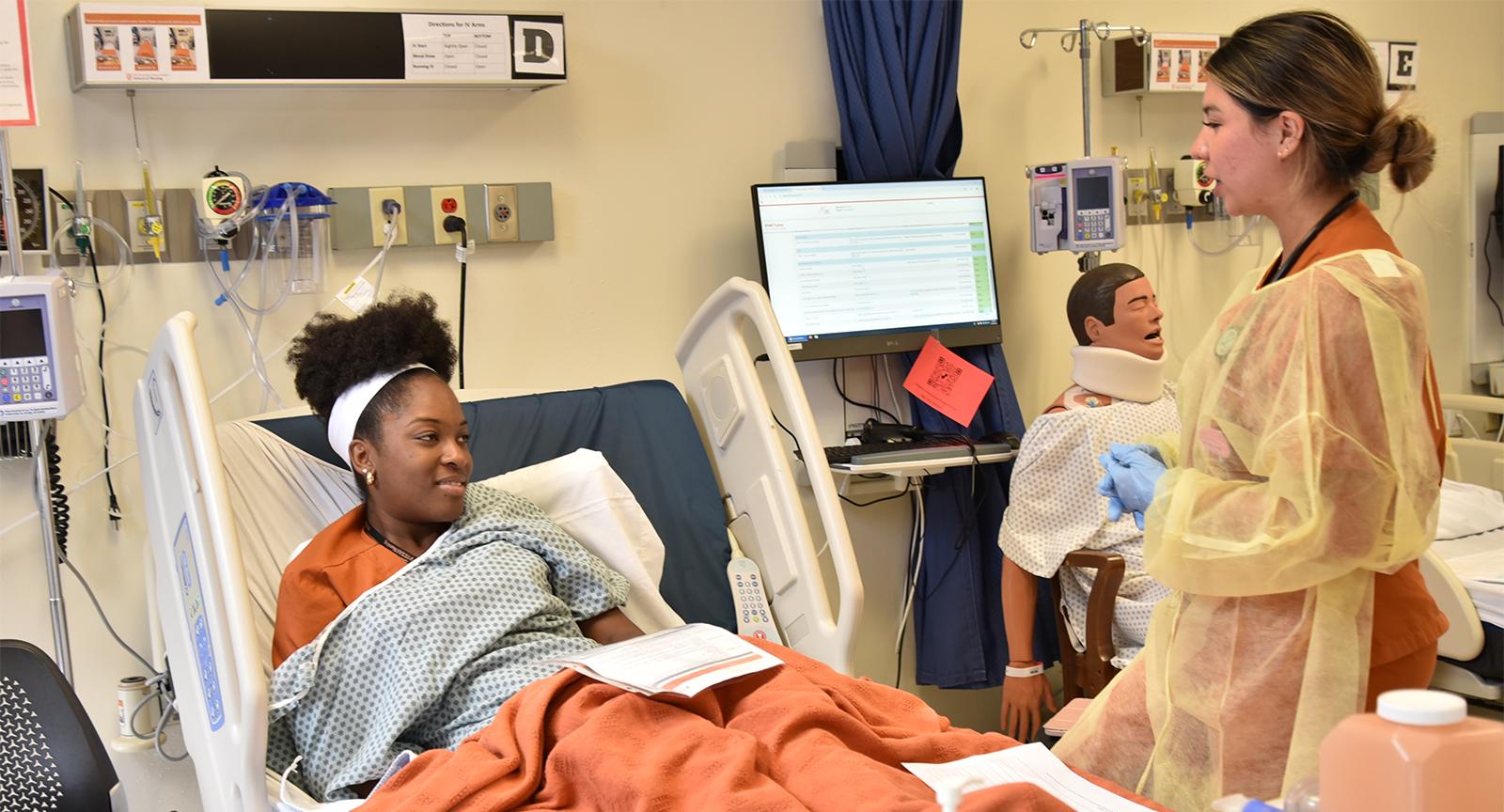
The Simulation and Skills Center (SSC) at the School of Nursing is a state-of-the-art facility that provides students with hands-on, realistic learning experiences. Equipped with advanced simulation tools, the Center prepares students to transition confidently from the classroom to clinical practice, ensuring they have the competencies needed for effective patient care.
Throughout the nursing program, students dive into a variety of simulations,” said Nicole Manley, MSN, RN, CHSE, CA-SANE, director of the Simulation and Skills Center. “These include role-playing exercises, high-fidelity manikin-based simulations, low-fidelity simulations and virtual reality activities. Each type of simulation is crafted to mirror real-life clinical scenarios, helping students sharpen their critical thinking and decision-making skills.”
Simulation and Skills Center: 2024-25 Academic Year at a Glance
7,000 Appointments
Open lab sessions and Video Performance Exams (VPE)
Peak Traffic: Wednesdays
Approximately 150–200 students per day
30,000 Learner Hours
Per year across various services, including classes, simulations, open lab and VPE.
12,000 Visits Per Year
Representing over 650 unique learners
18 Visits Per Learner
On average, each learner visits the Center about 18 times per academic year
Building Confidence with Practice
At the heart of the SSC is the simulation lab, where students engage with high-fidelity manikins that mimic real patients, from newborns to adults.
These immersive scenarios challenge students to think critically, prioritize patient needs and communicate effectively in a fast-paced clinical setting—all under the guidance of experienced faculty.
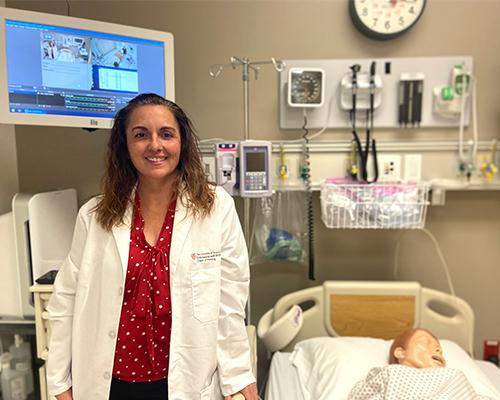
The lifelike simulations help bridge the gap between theory and practice, allowing students to refine their decision-making skills in a supportive, controlled environment.
“Our simulation programming is one of the key factors that sets our School of Nursing apart,” Manley added. “We offer a wide variety of simulations throughout the program, covering all levels and specialties. This comprehensive approach ensures that students gain hands-on experience in diverse clinical scenarios, preparing them for the complexities of real-world nursing.”
Complementing this experience is the skills lab, designed to simulate a hospital ward where students practice essential nursing procedures, such as IV insertion and wound care. This space integrates hands-on training with instructional demonstrations, reinforcing both the technical and clinical reasoning skills required for high-quality patient care.
For more advanced assessments, the assessment lab provides a structured classroom setting equipped with exam tables, allowing students to develop their diagnostic and evaluation skills. This space is used for patient assessment practice, orientations and additional simulations that enhance clinical competency.
“Simulation is a fantastic way for students to build confidence,” Manley added. “It provides a safe space to practice and make mistakes without risking patient safety. Through repeated practice and feedback, students can refine their skills and gain the confidence needed to handle real-world nursing scenarios. Simulations also help students develop critical thinking and problem-solving abilities, which are essential for effective patient care.”
Simulations for Real-World Nursing
School of Nursing faculty play an important role in shaping the simulation experience for students. Working closely with SSC staff, they design and implement realistic and effective simulations that align with key learning objectives.
This collaboration includes developing detailed scenarios that mirror real-world clinical situations and providing hands-on guidance during simulation sessions. Supporting this effort are graduate teaching assistants and student assistants, who bring valuable clinical insights and peer perspectives.
Graduate assistants offer mentorship and guidance, while student assistants contribute feedback that helps refine programming.
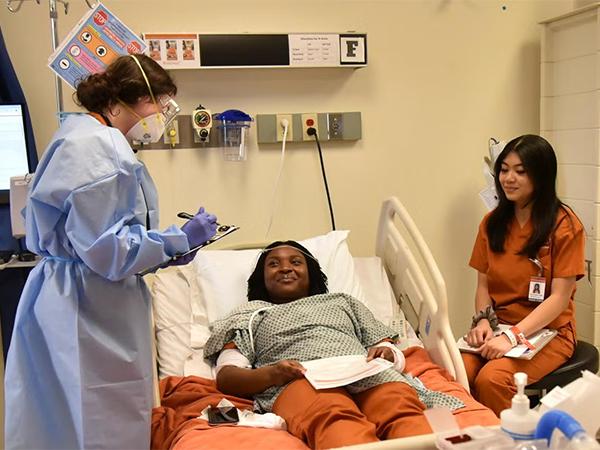
Faculty also actively participate in debriefing sessions, helping students reflect on their performance, identify strengths and address areas for improvement. This structured feedback process ensures that students gain the critical thinking and clinical skills necessary for their future nursing careers.
The effectiveness of simulations at the SSC is evaluated through a combination of student feedback, performance assessments and academic outcomes.
Post-simulation evaluations help gauge students’ perceptions of their learning experiences, while team assessments confirm their knowledge and skills. Progress is tracked over time to ensure continuous development.
In addition, qualitative feedback from both students and faculty plays a role in refining the simulation program. This ongoing evaluation process allows for continuous improvements, ensuring that simulations remain effective, engaging and aligned with the latest nursing practices.
One of the best ways to see this in action is through the success stories of students who have benefited from these hands-on experiences. From mastering critical skills in high-pressure scenarios to gaining the confidence needed for patient care, students consistently demonstrate how simulation training translates into real-world success.
Manley said the director of a hospital unit where Texas Nursing students were precepting praised the School’s programming for senior students who were part of a patient code blue.
The director was impressed with the students’ calm demeanor and ability to jump in and help during the code.
But it was no coincidence. A few weeks prior, these students had completed a code blue simulation that prepared them for situations just like this.
“I have also had students who return after graduating and share with us experiences as a new nurse that were shaped by simulation activity, or they applied that experience in caring for a patient,” she added.
Innovation in Instruction
The SSC has recently introduced cutting-edge technologies to enhance the learning experience for nursing students. One of the most significant upgrades is the implementation of a new Audio/Visual (A/V) Simulation & Skills Management System. This advanced system enables instructors to capture detailed competencies, bookmark key video segments and provide targeted feedback during student debriefing sessions. By recording and analyzing these sessions, students can track their progress over time and identify areas for improvement, ultimately strengthening their clinical skills.
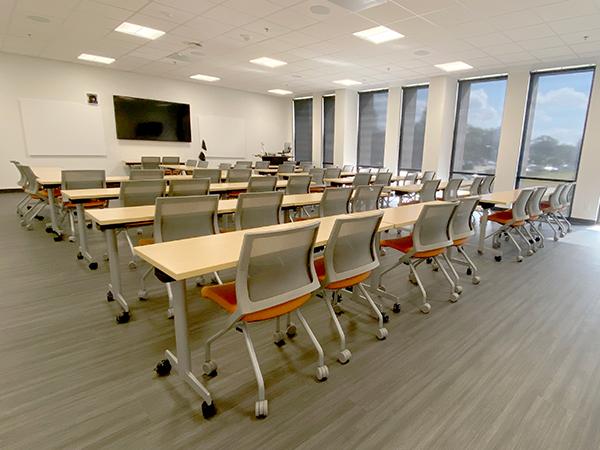
The new A/V system enhances real-time assessments, allowing instructors to review student performance with greater accuracy and ensure that essential competencies are met.
These advancements also expand the SSC’s recording capabilities into the advanced practice health assessment space and two additional classrooms with mobile systems. By capturing a wider range of student activities, the Center can offer an even more immersive and effective learning environment. These innovations are designed to better prepare students for the complexities of real-world nursing, ensuring they enter clinical practice with confidence and proficiency.
Continuing to enhance its learning environment with new technology, SMART Boards have been added to skills rooms, allowing faculty and teaching assistants to visually reinforce key concepts. Instructors can display and annotate videos of skills being performed, providing students with deeper insights and real-time guidance to improve their practice.
Additionally, over the past two years, all SSC spaces have been equipped with new medication machines. These systems replicate those used in hospital settings, giving students hands-on experience in safe medication administration. These upgrades further support student learning, ensuring they develop the confidence and competency needed for clinical practice.
Future-Focused Facility
The SSC is gearing up for exciting advancements to further enhance nursing education. A key focus is expanding virtual reality capabilities and integrating artificial intelligence into patient profile development and scenario building.
During Summer 2025, faculty-led initiatives updated simulations to align with the latest health care practices and protocols.
Additionally, interdisciplinary simulation experiences are being reintroduced, strengthening collaboration with other health care disciplines—an effort that had slowed during the pandemic.
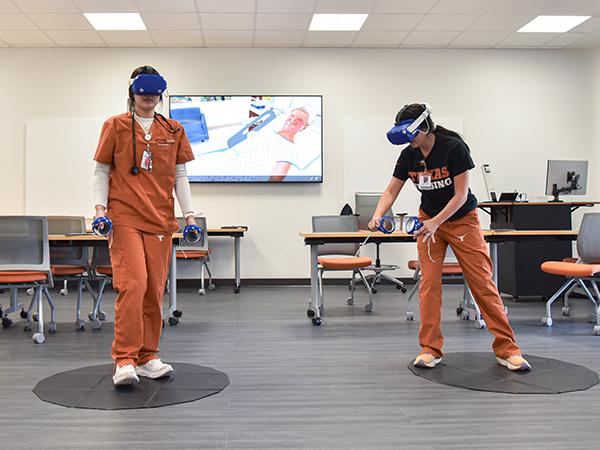
The SSC also expanded learning spaces to accommodate activities such as VR training, patient interviewing and group simulations. These enhancements provide students with more opportunities to develop their clinical and teamwork skills in a setting that reflects real-world health care collaboration. Additionally, the Center is refining its pre-briefing and debriefing processes during Fall 2025 to ensure faculty and students are well-prepared for simulations.
Team-based simulations remain a priority, allowing students to strengthen their communication and teamwork skills in a realistic environment. The capstone course has already integrated advanced team-based simulations, providing invaluable hands-on experience.
To further support students, two classrooms were renovated during the summer, in large part thanks to funding from the Office of the Executive Vice President and Provost. These spaces have been transformed into state-of-the-art learning environments equipped with the latest technology.
A Focused Learning Environment
The SSC is also introducing programs to help students manage stress and improve their mental well-being.
Piloted during the spring and summer of 2025 with students during open lab hours, these programs use immersive VR environments to guide students through mindfulness exercises and meditation practices, providing a unique and effective way to promote relaxation and focus.
“We’ve also introduced music in our open lab spaces,” Manley added. “A few semesters ago, we had teaching assistants who began playing music during open lab sessions, and our students really appreciated it. Those TAs have since graduated, but we have kept the tradition going.”
Manley said the teaching assistants assess the mood of the students during the open lab sessions and choose music—accordingly—opting for calming or ambient tracks. Joshua Thomas, DNP, RN, CNE, clinical assistant professor, introduced music into his skills class as students are practicing.
He was inspired to incorporate music into his classes by one of his former professors, Danica Sumpter, PhD, RN, clinical assistant professor, who played ambient or classical music before class sessions. He notes that recent research supports this practice, showing that music can significantly reduce nursing students’ blood pressure, heart rate and anxiety levels.
“I used music as a way to help introduce myself and my personality to my students and would often take requests from students so they could hear and share their favorite music with their peers,” Thomas said. “Based on my personal observations, students appeared more relaxed and at ease. Additionally, I found that students found me to be more approachable which allowed me to more quickly address their concerns or questions.”
In addition to using music, Thomas leads his lecture classes in box breathing exercises or brief guided meditations before quizzes and exams. He said students have responded positively, sharing that these practices help ease pre-test anxiety and create a calmer learning environment.
“We are always looking for ways to improve the learning environment,” Manley said. “Introducing music not only enhances the current atmosphere but also models for students the environments they may need to create when they go out to practice as nurses. Experiencing difficult shifts is a part of nursing and knowing how to create a calming and focused environment can be incredibly beneficial.”
By offering a comprehensive, hands-on approach to nursing education, the SSC ensures that students graduate with the confidence, skills and critical thinking abilities needed to excel in their profession. Through innovative simulation techniques and a commitment to excellence, the School of Nursing continues to shape the future of patient care.
Faculty members leading initiatives to update simulations and align them with the latest health care practices and protocols include:

Yuri Gamez, MSN, RN
Clinical Instructor